

Leading in today’s fast-moving business environment demands both technological savvy and a growth mindset. The most effective leaders know that the right digital tools can transform team productivity, while the right mental frameworks ensure these tools deliver maximum impact.
I’ve spent over two decades as a business leader and consultant for brands like Oracle, Polaroid, Air New Zealand, and Apple. During that time, I’ve learned that success depends not just on which tools you use, but how intentionally you approach leadership itself.
As Jeff Duntemann wisely observed, “A good tool improves the way you work. A great tool improves the way you think.”
Let’s explore the essential tech tools that can elevate your leadership capabilities and the mindset needed to use them effectively.
Communication & Collaboration Platforms
1. Microsoft Teams or Slack

The backbone of modern team communication, these platforms eliminate endless email chains and centralize conversations, file sharing, and project management.
Both offer intuitive interfaces, robust search capabilities, and integration with hundreds of other apps. What makes them truly powerful is how they create transparency and accessibility across your organization.
When I worked with a global consulting team spread across five time zones, our Slack workspace became our virtual office. It wasn’t just about messages—it was about creating currents of ideas that flowed between team members who might never meet in person.
The best digital tools create pathways for others. As leaders, this is especially important, knowing that you are guiding the way by your actions.
2. Zoom or Microsoft Teams for Video Meetings
Video conferencing has evolved from a nice-to-have to an essential leadership tool. Beyond just connecting faces to voices, these platforms now offer:
- Breakout rooms for focused discussions
- Interactive whiteboards
- Live transcription
- Meeting recordings with AI summaries
The best leaders use video meetings strategically—not as a replacement for every in-person interaction, but as a tool for maintaining human connection when physical meetings aren’t practical.
3. Asynchronous Video Tools (Loom, Vidyard)
Sometimes live meetings aren’t necessary. Asynchronous video tools let you record quick explanations, demonstrations, or updates that team members can watch on their own time.
You might also like


I’ve found these particularly valuable for:
- Explaining complex concepts visually
- Providing feedback that might get lost in text
- Creating personal connections with remote team members
- Walking through documents or presentations
Project & Task Management
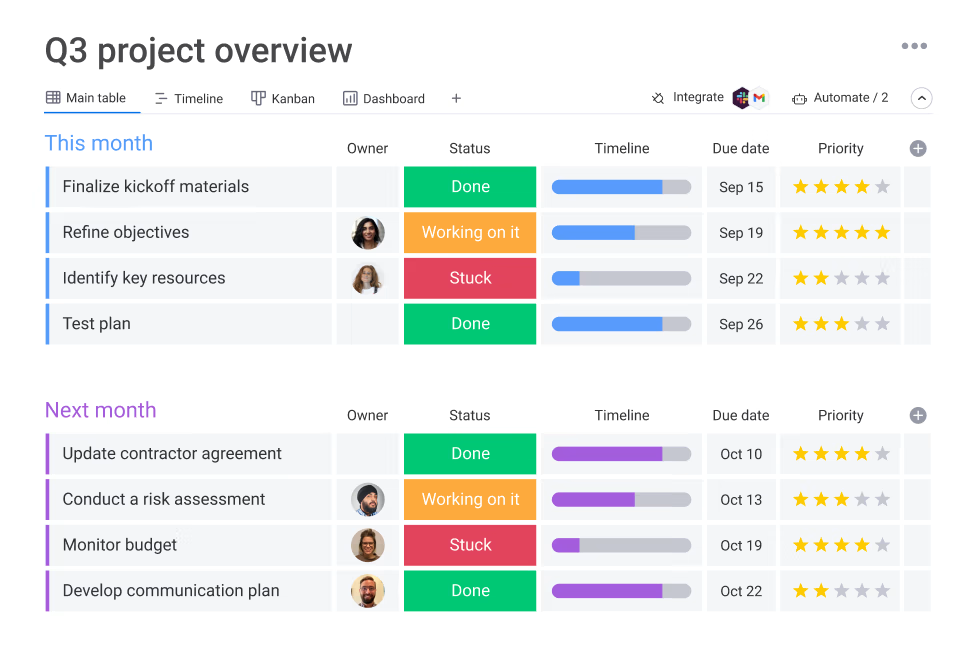
4. Project Management Software (Asana, Monday.com, ClickUp)
Modern leaders must orchestrate multiple workstreams simultaneously. Project management platforms create visual systems for tracking progress, deadlines, and responsibilities.
The most effective leaders don’t just use these tools to assign tasks—they use them to create transparency around priorities and progress. This builds trust and empowers team members to make decisions independently.
Trust is the highest form of human motivation. It brings out the very best in people. These tools, when used properly, cultivate that trust by making expectations and progress visible to everyone.
5. Digital Whiteboarding Tools (Miro, Mural)
Visual collaboration is powerful, especially with distributed teams. These digital canvases allow teams to:
- Brainstorm ideas together
- Map out processes and workflows
- Create visual project plans
- Conduct interactive workshops
I recently used Miro with a client team to redesign their customer journey. Being able to map everything visually revealed bottlenecks that weren’t obvious in spreadsheets or text documents.
6. Document Collaboration Platforms (Google Workspace, Microsoft 365)
Real-time collaboration on documents, spreadsheets, and presentations has transformed how teams work together. These platforms eliminate the confusion of multiple versions and enable truly collaborative creation.
The most powerful aspect is how they flatten hierarchies—junior team members can contribute ideas alongside executives, creating a culture where the best ideas win regardless of who suggests them.
Analytics & Decision-Making Tools

7. Business Intelligence Dashboards (Tableau, Power BI)
Leading with data requires accessible visualization tools. Modern BI platforms connect to your data sources and create interactive dashboards that help you:
- Identify trends and patterns
- Track KPIs in real-time
- Make informed decisions quickly
- Share insights throughout your organization
These tools should focus your attention on purpose as a priority over mundane tasks. Data tools should serve your mission, not create busywork analyzing metrics that don’t matter.
8. Note-Taking & Knowledge Management (Notion, Evernote, Obsidian)

Leaders process vast amounts of information daily. Digital note-taking tools help capture, organize, and retrieve important information when needed.
Modern solutions go beyond basic notes to create interconnected knowledge systems—linking related concepts, embedding multimedia, and making information searchable.
I’ve found these tools invaluable for:
- Preparing for meetings and presentations
- Tracking important decisions and their context
- Building personal knowledge libraries
- Creating and sharing templates for common workflows
Personal Productivity & Learning
9. AI Writing Assistants (ChatGPT, Claude, Jasper)
AI writing tools can dramatically improve a leader’s productivity by:
- Drafting emails, reports, and other communications
- Summarizing lengthy documents
- Generating creative ideas for presentations
- Providing feedback on your writing
The key is using these tools to enhance your voice, not replace it. Authenticity matters—allow people to see who you really are, both strengths and weaknesses. Real leadership gains trust through genuine connections with others.

10. Calendar Management Tools (Calendly, SavvyCal)
Time is a leader’s most precious resource. Scheduling tools eliminate the back-and-forth of setting up meetings by allowing others to book time based on your actual availability.
These tools should be configured to protect your time for deep work and strategic thinking—not just make you more available for meetings.
11. Digital Reading Platforms (Blinkist, Pocket, Kindle)
Continuous learning is essential for leadership growth. Digital reading tools help you:
- Save and organize articles to read later
- Get summaries of important books
- Highlight and capture key insights
- Build a personal library of knowledge
The most successful leaders understand that excellence comes from consistency. Building reliable reading habits through these platforms leads to compounding knowledge rewards over time.
Team Development & Culture
12. Learning Management Systems (Udemy for Business, LinkedIn Learning)
Investing in your team’s growth is a leadership imperative. Modern learning platforms offer courses on virtually every business skill and technology.
The best leaders don’t just provide access—they create learning paths aligned with both organizational needs and individual career aspirations.
I’ve seen how structured learning opportunities can transform potential into performance.
13. Pulse Survey Tools (Culture Amp, 15Five)
Understanding your team’s engagement, challenges, and suggestions requires regular feedback. Pulse survey tools make this process simple and actionable.
More importantly, they demonstrate that you value input and are committed to creating a responsive work environment—key for building trust and psychological safety.
14. Recognition Platforms (Bonusly, Kudos)
Public recognition strengthens culture and reinforces valued behaviors. Digital recognition platforms facilitate peer-to-peer appreciation and make accomplishments visible across the organization.
These tools align perfectly with the principles of gratitude, interdependence, and optimism—three elements that form the language of great leaders.

The Most Important Leadership Tool: Your Mindset
15. Digital Wellness Tools (Headspace, Focus@Will, RescueTime)
The most sophisticated tech stack won’t help a burnt-out leader. Digital wellness tools help maintain the mental clarity needed for effective leadership:
- Meditation apps for stress management
- Focus music to enhance concentration
- Time tracking to improve productivity habits
- Screen time management to support digital boundaries
Leaders should expect the push that comes as a normal part of life, but must insert some space or rest in their world to be successful. These digital wellness tools help create that essential balance.
Choosing the Right Tech Stack for Your Leadership Style
The tools listed above represent possibilities, not requirements. Effective leaders select technologies based on:
- Your team’s specific needs and challenges
- Your organizational culture and work patterns
- Integration capabilities with existing systems
- Simplicity and ease of adoption
Being agile in your technology selection means maintaining openness, flexibility, and focus on outcomes, not features. The best tools adapt to your leadership style, not the other way around.

Implementing New Technology: The Leadership Challenge
Introducing new tools requires more than just licenses and logins. Consider these implementation principles:
- Start with why: Clearly communicate how the tool supports team goals
- Lead by example: Actively use the platform yourself
- Provide adequate training: Different team members will need different levels of support
- Gather feedback: Be prepared to adapt based on real-world usage
- Be patient: New habits take time to form
Conclusion: Tools Support Leadership, They Don’t Replace It
The technology landscape will continue evolving rapidly. What won’t change is the need for leaders who can use these tools purposefully to create connection, communication, and growth.
In my book 10 Leading Tools, I emphasize that bold leadership requires “adopting a personal posture of courage and calculated confidence in your actions.” Sometimes that means embracing new technologies; other times, it means sticking with simpler solutions that serve your team’s needs.
The most powerful leadership tool will always be your ability to combine technological capability with human connection. When you balance both, you’ll create an environment where teams and individuals can achieve their full potential.
What specific leadership technologies have transformed your work? I’d love to hear about your experiences in the comments below.


